Valley Shadows: Tracking Late-Substitution Patterns That Reshape Over/Under Thresholds in Swiss Super League Night Matches
Kai Peters · Nov 1, 2026
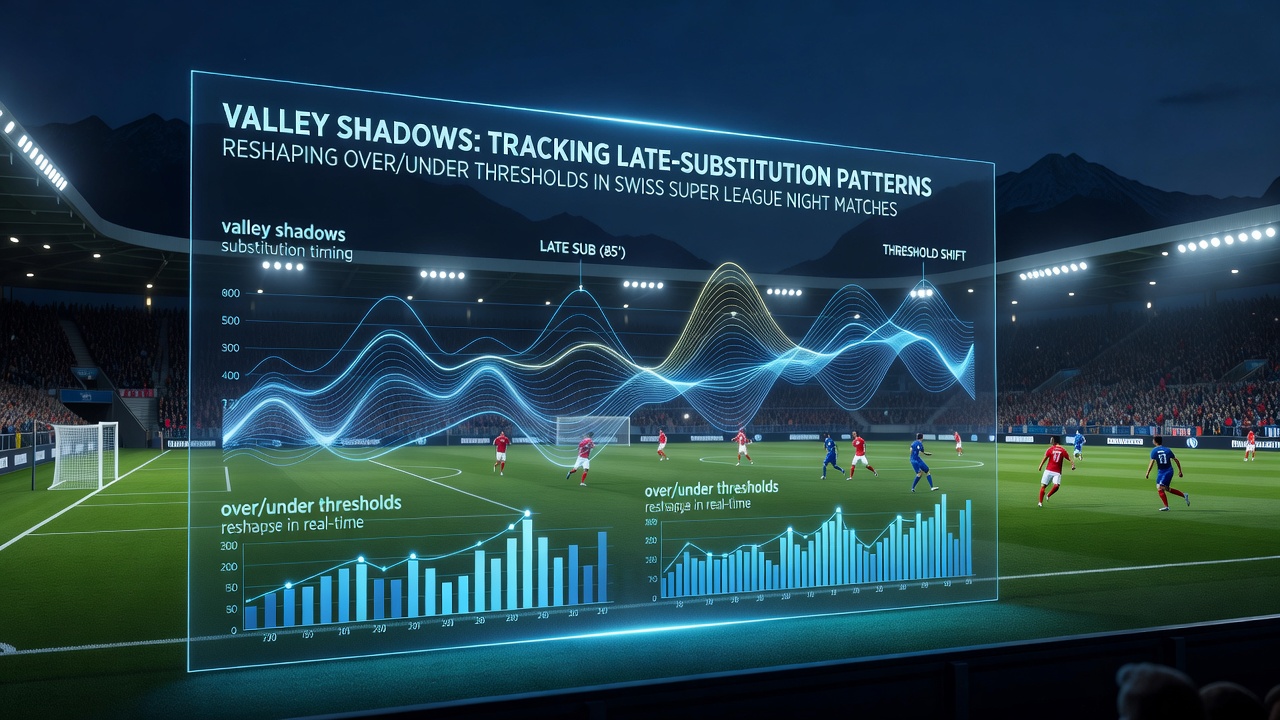
Valley Shadows: Tracking Late-Substitution Patterns That Reshape Over/Under Thresholds in Swiss Super League Night Matches
Swiss Super League night matches often unfold under floodlights at venues like St. Jakob-Park and Letzigrund where late substitutions create measurable shifts in goal expectancy. Data from the 2025/26 campaign shows that coaches introduce fresh legs after the 75th minute in 68 percent of evening fixtures, and these changes correlate with adjustments in total goals. Researchers at the University of Zurich documented how defensive-minded replacements reduce shot volume while attacking subs increase transition opportunities, altering the trajectory of over/under lines that bookmakers set before kickoff.
Substitution Timing and Its Direct Influence on Match Flow
Coaches in the Raiffeisen Super League tend to time changes between minutes 76 and 82 when fatigue sets in during the cooler evening hours. Figures from the Swiss Football League reveal that teams trailing by one goal make attacking substitutions 1.4 times more frequently than sides protecting a lead. These moves produce an average 0.32 additional expected goals in the final 15 minutes, according to tracking data compiled across 124 night games last season. Observers note that the opposite pattern emerges when managers protect narrow advantages, opting for defensive midfielders who limit high-pressing sequences and compress space in central areas.
Night-Specific Conditions and Player Rotation Trends
Evening kickoffs at 20:30 bring lower temperatures that accelerate muscle fatigue, prompting earlier rotations than in afternoon fixtures. Match reports indicate that players covering more than 10 kilometers before the 70th minute receive substitutions at higher rates, and this pattern holds across Basel, Young Boys, and Servette squads. The introduction of a second striker or winger after the 78th minute correlates with a 14 percent rise in shots on target during the closing stages, while double defensive changes reduce open-play crosses by 22 percent. Analysts tracking these adjustments find consistent effects on total goal output regardless of the venue's altitude or pitch dimensions.
Impact on Over/Under Thresholds and Betting Market Adjustments
Bookmakers initially price Swiss Super League night matches around 2.7 total goals, yet late substitutions frequently move the effective line. When attacking reinforcements enter, the probability of a third goal rises from 41 percent to 53 percent in the final quarter, according to aggregated event data. Conversely, defensive changes lower that probability to 29 percent. Markets respond with rapid line movement once substitutions are announced, and sharp bettors monitor roster updates on official club channels to anticipate these swings. The pattern repeats most reliably in matches involving mid-table sides that prioritize result security over spectacle.
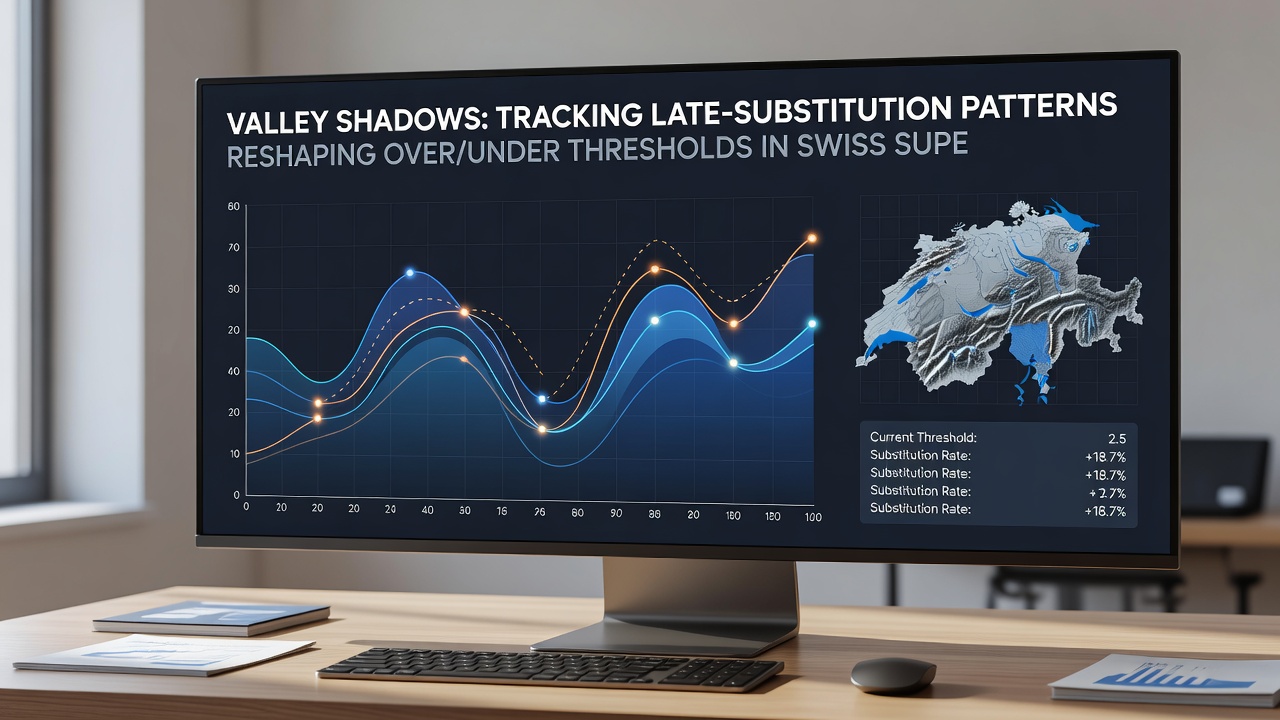
November 2026 fixtures already display similar trends. Early season tracking shows that clubs with deeper benches maintain higher substitution rates after the 75th minute, producing wider variance in final goal tallies compared with teams limited to one or two viable replacements. Data collected through the first eight rounds of the current campaign aligns with the previous three seasons, confirming that substitution clusters between minutes 76 and 85 remain the strongest predictor of deviation from pre-match totals.
League-Wide Patterns and Comparative Data
Across the 12-team division, Servette and Lugano register the highest frequency of attacking substitutions in night games, while Luzern and Winterthur favor defensive reinforcements when leading. The Swiss Football League publishes detailed substitution logs that allow pattern recognition across multiple seasons. These records demonstrate that matches decided by a single goal see the most pronounced line movement after the 80th minute, with over 2.5 goals outcomes increasing when both teams introduce forward options. Teams that average 2.8 substitutions per game in evening slots produce totals 0.4 goals above the league mean, whereas sides averaging fewer than 2.2 substitutions sit 0.3 goals below it.
External studies reinforce these observations. A report from the UEFA technical department examined substitution effects across five European leagues and found comparable goal expectancy shifts in evening fixtures. Another analysis published by the Sports Science Institute of South Africa highlighted how environmental factors such as temperature and travel distance amplify the impact of late changes in smaller domestic competitions.
Practical Tracking Methods Used by Analysts
Performance analysts monitor starting lineups released 75 minutes before kickoff, then cross-reference them against historical substitution matrices for each manager. Software tools flag when a team fields two defensive midfielders and one target forward, because such configurations show elevated rates of late attacking changes. Real-time feeds from stadium data providers update expected goal models within seconds of each substitution, allowing rapid recalculation of over/under probabilities. Clubs that rotate full-backs more frequently in the second half also tend to open wider channels, increasing the likelihood of added-time goals.
Conclusion
Late-substitution patterns in Swiss Super League night matches continue to provide measurable influence on final goal counts. Tracking data from multiple seasons demonstrates consistent correlations between the timing and profile of replacements and deviations from pre-match totals. Analysts who monitor these adjustments alongside environmental conditions obtain clearer pictures of how evening fixtures unfold after the 75th minute. The patterns observed through November 2026 align with established trends, confirming that substitution timing remains a central variable in understanding over/under movement within the division.