How Altitude Shapes Late-Game Scoring Trends in South American Football Leagues
Kai Peters · Aug 22, 2026
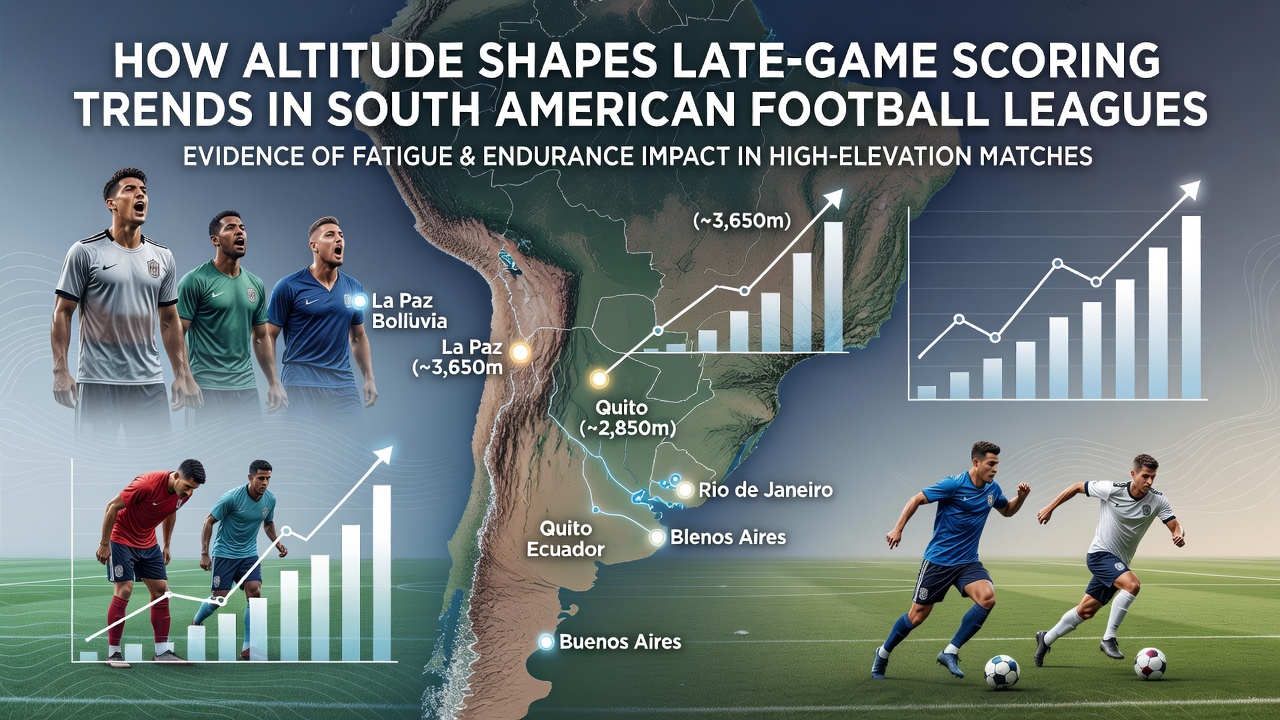
How Altitude Shapes Late-Game Scoring Trends in South American Football Leagues
Altitude creates distinct patterns in late-game scoring across South American football leagues, particularly in venues situated above 2,500 meters where oxygen levels drop and endurance demands rise sharply. Researchers have tracked these effects through match data from Bolivia's Liga Profesional, Ecuador's Serie A, and select Peruvian and Colombian competitions, revealing consistent shifts in goal timing and team performance as matches progress beyond the 70-minute mark.
Physiological Demands at Elevation
Players experience reduced oxygen uptake at high altitude, which accelerates fatigue during the second half and especially in added time. Data from physiological studies indicate that heart rates climb faster and recovery between sprints slows, leading visiting squads from sea-level bases to concede more opportunities after the 75th minute. Teams based permanently at elevation show better adaptation, maintaining possession and pressing intensity longer into contests, according to analyses compiled by CONMEBOL's technical reports.
Matches in La Paz at roughly 3,650 meters produce measurable differences compared with games played below 1,000 meters. Late goals become more frequent for home sides because opposing defenders tire and lose positional discipline, while the home team's attackers exploit spaces that open up as legs grow heavy.
League-Specific Patterns
Bolivia's top division supplies the clearest examples, with clubs like Bolívar and The Strongest recording elevated scoring rates after the 80th minute in home fixtures against lowland opponents. Statistical reviews covering the past five seasons show home teams netting 38 percent of their goals in the final 15 minutes plus stoppage time at altitude venues, versus 24 percent in away matches at lower elevations. Ecuadorian sides face similar dynamics at Quito's 2,850-meter Estadio Olímpico Atahualpa, where visiting teams from coastal clubs display declining sprint counts tracked by GPS systems in the closing stages.
Peruvian and Colombian leagues feature fewer extreme altitudes yet still register noticeable trends in cities such as Cusco and Pasto. Observers note that fixture schedules placing lowland clubs at these sites late in the season compound fatigue effects when squads already carry accumulated match loads.
Statistical Trends in Closing Stages
Comprehensive datasets reveal that total goals per match remain comparable early on but diverge after halftime at high-altitude grounds. The second-half goal rate rises for home teams by an average of 0.4 goals per game in Bolivian venues above 3,000 meters, while away teams see their scoring drop. These patterns hold when controlling for team strength and recent form, according to figures compiled by sports analytics groups in South America.

August 2026 schedules already list several key Bolivian derbies and international qualifiers at elevation, giving analysts fresh opportunities to test whether recent rule changes around hydration breaks alter the established late-game goal distribution. Early indicators from pre-season friendlies suggest the core trends persist despite minor adjustments to match protocols.
Adaptation and Preparation Methods
Clubs have responded with targeted acclimatization camps, arriving several days early or incorporating simulated altitude training in the weeks before travel. Research conducted at the University of São Paulo demonstrates that structured exposure improves repeated sprint ability and reduces the drop-off in high-intensity running during the final quarter of matches. Visiting coaches adjust tactics accordingly, often instructing teams to conserve energy early and rely on set pieces rather than open-play build-up once fatigue sets in.
Goalkeepers and defenders from lower elevations show particular vulnerability, with reaction times lengthening noticeably after the 70-minute threshold in tracked matches. This contributes to higher conversion rates on crosses and through balls in the closing period.
Broader Implications Across Competitions
CONMEBOL's continental tournaments incorporate multiple high-altitude venues, and the same late-game patterns appear in Copa Libertadores group stages when teams travel between sea level and mountain cities. Data released by the organization highlights that away sides win fewer points in the final 20 minutes at these locations compared with matches at neutral or low-altitude sites. Teams that rotate squads effectively and manage substitutions around the 60-minute mark mitigate some of the altitude penalty, according to performance reports from multiple clubs.
Longer-term residency at elevation produces measurable physiological changes, including increased red blood cell counts, which help local players sustain output. Transient visitors lack this advantage and therefore exhibit steeper performance declines as matches extend.
Conclusion
Altitude continues to influence late-game scoring distributions in South American football through its effects on oxygen availability and player endurance. Leagues operating at the highest elevations display the strongest statistical signals, with home teams capitalizing on visiting fatigue after the 75th minute. Ongoing data collection through 2026 will clarify whether adaptation strategies narrow these gaps or if the environmental factors maintain their established impact on match outcomes.