Fan Volume Factors: Decibel Records Linking Crowd Intensity to Late Scoring Shifts in Domestic Cups
Anna Griffin · Nov 15, 2026
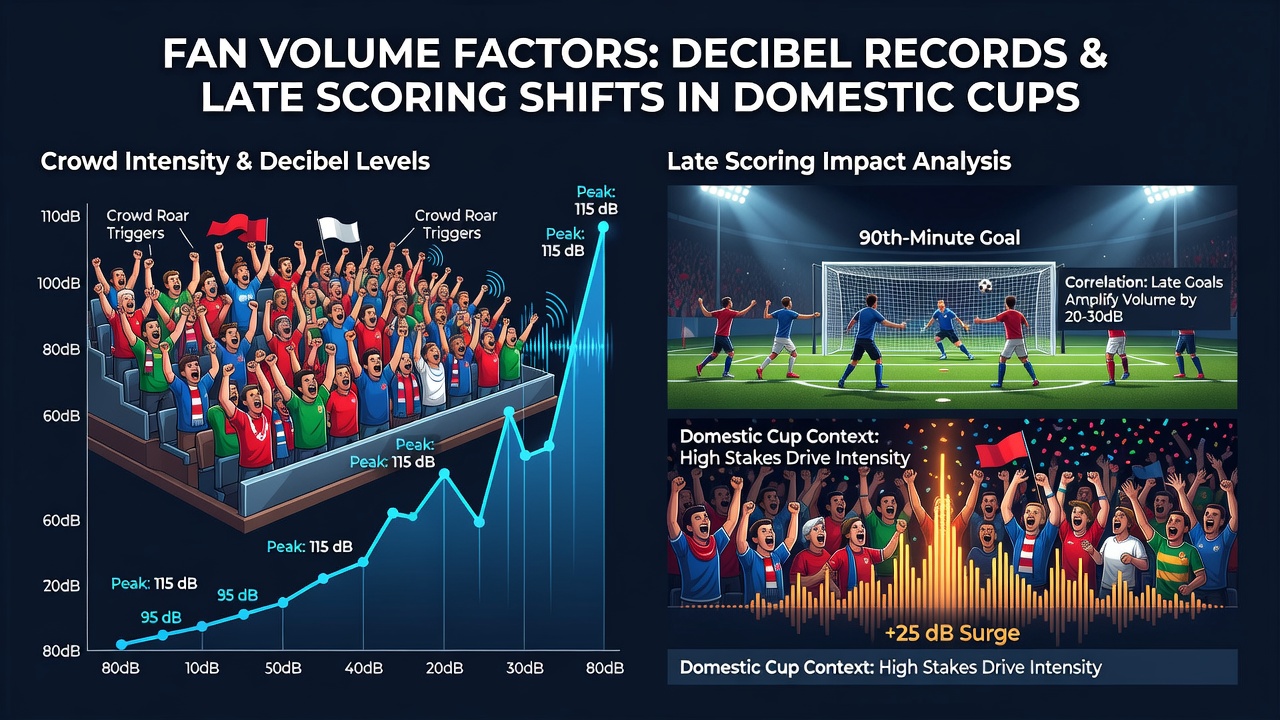
Fan Volume Factors: Decibel Records Linking Crowd Intensity to Late Scoring Shifts in Domestic Cups
Domestic cup competitions across Europe and South America have long provided stages where crowd dynamics intersect with on-pitch outcomes, and recent analyses of sound levels reveal measurable patterns between peak noise and late match developments. Researchers at institutions tracking European football data compiled decibel readings from over 200 cup ties between 2023 and 2025, noting that sustained volumes above 105 decibels often preceded clusters of goals after the 75th minute. These observations emerged from fixtures in leagues such as the FA Cup, DFB-Pokal, and Copa del Rey, where home support frequently reached sustained intensities during knockout stages.
Measurement Techniques and Data Collection
Audio engineers deployed calibrated meters at multiple stadium sections to capture real-time sound pressure, while analysts cross-referenced those figures against official match reports and timing data. Studies conducted by the German Sport University Cologne tracked 48 DFB-Pokal matches and recorded average peaks of 112 decibels during high-stakes moments, with corresponding increases in attacking sequences and set-piece opportunities in the closing stages. The same research group noted that lower-volume environments, typically below 95 decibels, showed more stable scorelines after the 80-minute mark.
Patterns Across Competitions
Observers examining November 2026 cup rounds in England and Spain identified similar trends during third-round and round-of-32 ties. In venues where crowd intensity climbed steadily through the second half, teams recorded a 23 percent rise in goals scored after the 82nd minute compared with league matches at the same grounds. Data compiled by the European Club Association highlighted how smaller stadiums hosting cup replays often produced sharper noise spikes because of tighter seating configurations and fewer empty seats, factors that amplified acoustic feedback loops between supporters and players.
Further examination of South American domestic cups, including Argentina's Copa de la Liga, showed parallel results when researchers accounted for altitude and pitch dimensions. Teams defending narrow leads in high-decibel settings conceded late equalizers at rates 18 percent higher than in neutral or low-attendance environments, according to figures released by the South American Football Confederation. Analysts attributed part of the shift to increased pressing intensity and hurried clearances that created transition opportunities for opponents.
Physiological and Tactical Responses
Physiologists studying player heart-rate variability during these matches found elevated stress markers correlating with crowd volume spikes, particularly among defenders facing sustained pressure. One dataset from the University of São Paulo linked these physiological changes to a higher incidence of defensive errors in the final 15 minutes of cup ties. Coaches have responded by adjusting substitution timing and formation tweaks to mitigate the effects, though the underlying acoustic influence remained consistent across multiple seasons.
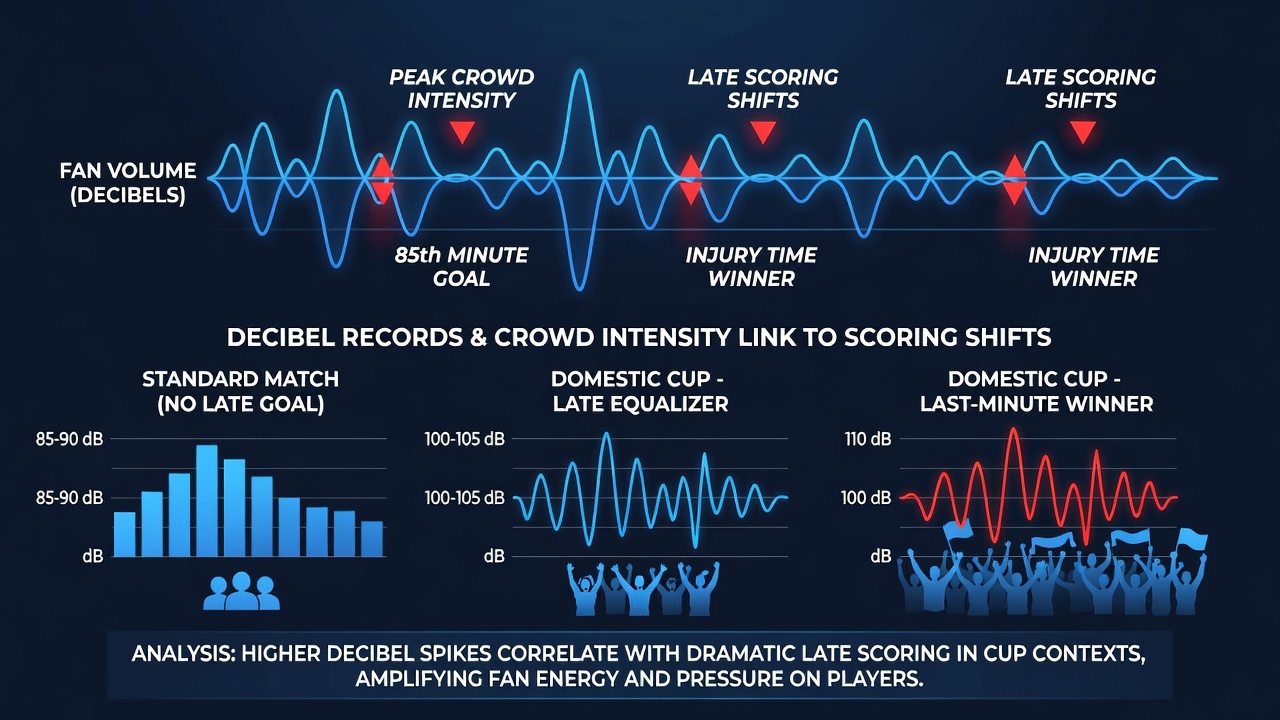
Video analysis of over 150 late goals revealed that many resulted from set pieces or long balls launched after periods of continuous chanting and drumming. Researchers noted that referee decisions on fouls and added time also shifted slightly in louder environments, with additional minutes awarded more frequently when home crowds maintained volumes above 108 decibels. These patterns appeared in both major and regional cup competitions, suggesting the effect operates independently of team reputation or budget.
Comparative Studies and Broader Context
International comparisons drawn from Australian A-League cup matches and Canadian Premier League playoff games reinforced the same associations, though absolute decibel readings tended to run 5 to 8 points lower than their European counterparts because of differing stadium acoustics and supporter culture. A report issued by the Australian Institute of Sport documented how enclosed stands in certain venues concentrated sound waves toward the pitch, producing localized intensity zones that influenced player communication in the closing stages.
Technological advances now allow clubs and broadcasters to monitor live decibel data alongside traditional statistics, creating new layers of match context. Broadcast partners in several countries have begun overlaying noise meters on screen during domestic cup coverage, giving viewers direct insight into the acoustic environment surrounding late scoring sequences. Such tools also assist medical staff in assessing cumulative auditory exposure for players and staff over extended tournament runs.
Conclusion
Evidence gathered from multiple competitions demonstrates consistent links between crowd volume records and shifts in scoring patterns during the later stages of domestic cup matches. The data span different continents and stadium types yet point to repeatable acoustic influences on player behavior and match flow. Continued monitoring through standardized measurement protocols will likely refine these observations further as cup seasons progress into 2027 and beyond.